Tuesday, February 18, 2014
Tuesday, February 4, 2014
Thursday, January 30, 2014
AP Concentration
1)
What is the central idea of your concentration?
In everyday life, we often occupy
seemingly mundane spaces with ordinary objects. Whether it be a school, a
building, or your own bedroom, there is a monotony and routine that makes us
jaded to dull surroundings. However, upon close observation, one can notice
that those very locations can be full of animation and radiance, from the
reflection on the window, to the sunset on the building face. In IB art, I have
been interested in investigating this hidden vitality. Consequently, the
central idea of my concentration was golden luminescence in the context of
still life. In my concentration, I explored how dimly lit areas can be given a
certain aura and charm when golden glow was deliberately included on surfaces.
In a room nearly enveloped in dark shadow or perhaps even in a stark blue sky,
values of yellow, particularly the rich golden color often associated with a
metallic gleam, could be used to manipulate tone from downcast or passive to
optimistic and even playful. In the concentration I also aimed to demonstrate
the spectrum of subjects that could be enhanced with such vibrant light, using
a variety of subjects and compositions. The collection was a reflection on the
subtle yet notable manifestation of a halo effect of gold light, and its
ability to dictate my work’s artistic identity.
2)
How does the work in your concentration demonstrate the exploration of your
idea?
The
concentration of golden glow began with exploration of still life in the form
of a bottle. I had previously enjoyed the process of depicting transparency and
glass with refraction of light, and continued that in my concentration.
Following the theme of vibrant color choice, I selected a bright red foreground
and golden-beige background, which filtered through the bottle’s various ridges
and indentations. In sections almost ethereal with thin glass and golden light,
the piece reflected that same charm described previously. I then transitioned
into exploration of the golden light through portrait, which is where the
playful and innocent quality was utilized. The portrait was of a young boy
sleeping in his bed wearing a plastic grown, and I think that the contrast
between the heavy darkness surrounding his back with the shining golden crown
and enhanced auburn-pink in the face created the desired effect. The
concentration’s idea of specifically having the reflective gold material was
important in showing that fanciful and whimsical youth. In my first year of IB,
I had done an oil painting of architecture that contained similar lighting, and
decided that this would be a good idea for the third piece which was a copula
atop a colonial building at sunset, done in oil pastel however. This piece on
the other hand utilized gold lighting for the purpose of creating an impressive
yet peaceful structure, surrounded by bright blue sky. The usage of oil pastel
was then addressed in a similarly serene and delicate way in the landscape done
of the porch light shining on a snowy back yard. Overall the concentration
explores these many ways of using golden glow in still life.
Tuesday, January 14, 2014
Saturday, December 21, 2013
Monday, December 9, 2013
Thursday, December 5, 2013
Monday, November 18, 2013
Sunday, November 10, 2013
Mentor Artist and Concentration
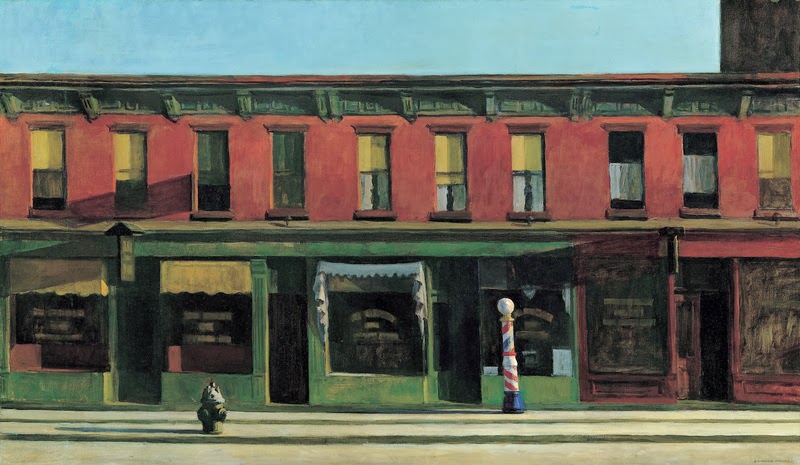
Edward Hopper
Early Sunday Morning
1930
Whitney Museum of American Art
New York City
Edward Hopper (additional artwork)
Summer Evening
1947
Private Collection
In Early Sunday Morning, many of the features characteristic of Hopper are apparent. Firstly, on the building face he uses both a bright red and green with a clear partition between the two. The simple of division of bright and even more exaggerated glowing is an idea that I will use in the concentration. Another feature of his work is the use of light as geometry. Hopper is noted for frequent use of rectangular shapes and shadows cast through windows. In this piece that is visible with the fire hydrant and the window above it. Even in the composition there are many geometric features, like the long series of windows on the first and second floors. Lastly, similar to my piece “Facade”, this piece contains clear divisions between levels of the building, and the blue sky around. The idea of having distinguished background and object with contrast is something for the concentration. I additionally uploaded the painting Summer Night to supplement Early Sunday Morning because I saw clear similarities with the nighttime landscape I did of my house porch under the moonlight. An idea that I used similar to Hopper was the illumination of an area (porch) which is otherwise enveloped by darkness and near blackness.
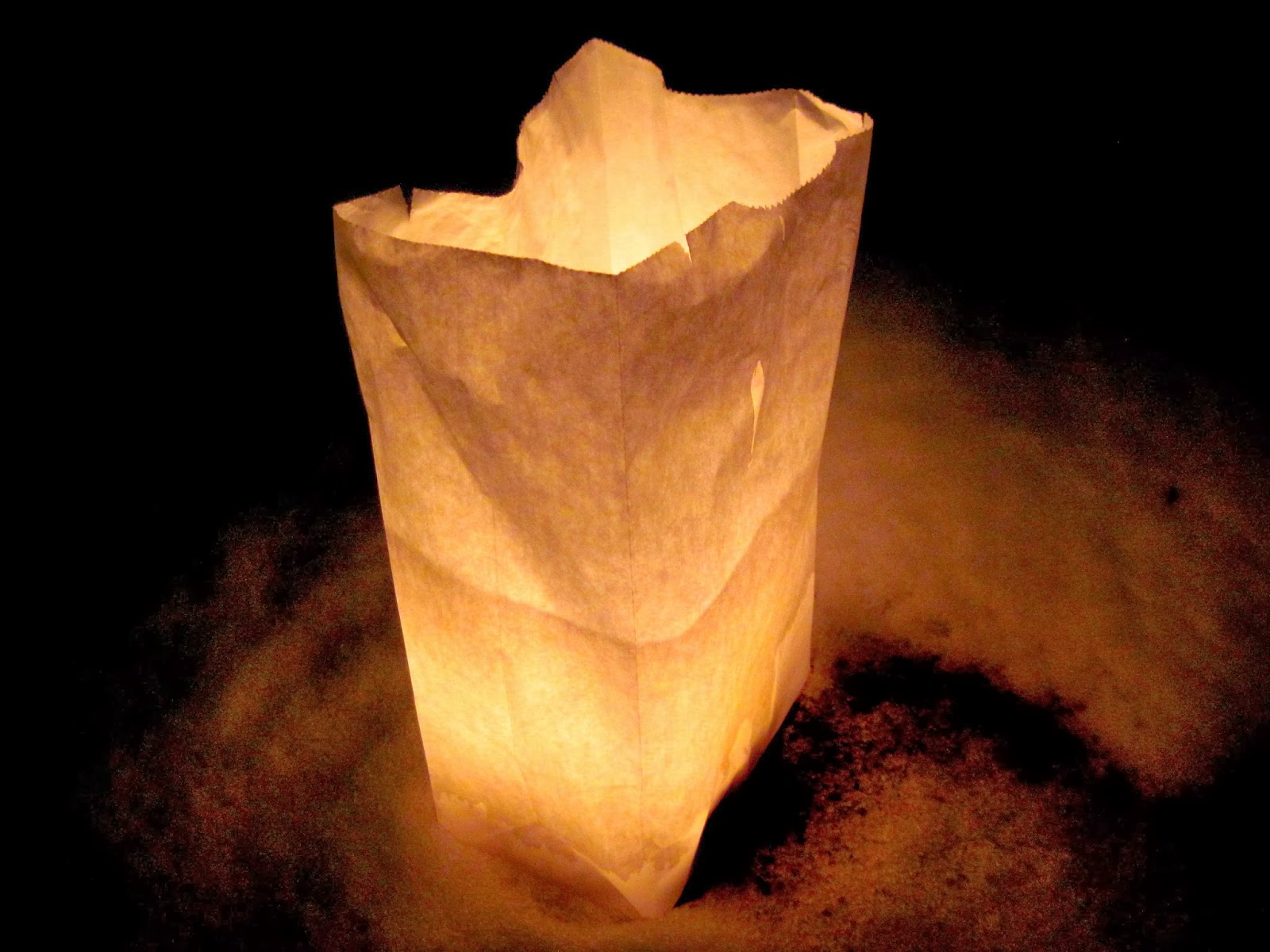
In my concentration, firstly I plan to explore the element of “glow” that is found in my previous pieces. While some work can be dull in nature, with reduced saturation, I plan to intensify the vibrancy and radiance. Also, in terms of color I plan to use primarily warm colors, such as reds and yellows because of their tendency to enliven paintings, and give the desired effect through color. Lastly, in terms of space I will make the object occupy the majority of the composition. I think that I work best when dealing with small details, therefore by enlarging the image will help in that goal. An example of this is below with the candleholder, which served as an example for me for the necessity to make the objects much larger to emphasize the light in its base.
My work related to concentration:

Early Sunday Morning
1930
Whitney Museum of American Art
New York City
Edward Hopper (additional artwork)
Summer Evening
1947
Private Collection
In Early Sunday Morning, many of the features characteristic of Hopper are apparent. Firstly, on the building face he uses both a bright red and green with a clear partition between the two. The simple of division of bright and even more exaggerated glowing is an idea that I will use in the concentration. Another feature of his work is the use of light as geometry. Hopper is noted for frequent use of rectangular shapes and shadows cast through windows. In this piece that is visible with the fire hydrant and the window above it. Even in the composition there are many geometric features, like the long series of windows on the first and second floors. Lastly, similar to my piece “Facade”, this piece contains clear divisions between levels of the building, and the blue sky around. The idea of having distinguished background and object with contrast is something for the concentration. I additionally uploaded the painting Summer Night to supplement Early Sunday Morning because I saw clear similarities with the nighttime landscape I did of my house porch under the moonlight. An idea that I used similar to Hopper was the illumination of an area (porch) which is otherwise enveloped by darkness and near blackness.
In my concentration, firstly I plan to explore the element of “glow” that is found in my previous pieces. While some work can be dull in nature, with reduced saturation, I plan to intensify the vibrancy and radiance. Also, in terms of color I plan to use primarily warm colors, such as reds and yellows because of their tendency to enliven paintings, and give the desired effect through color. Lastly, in terms of space I will make the object occupy the majority of the composition. I think that I work best when dealing with small details, therefore by enlarging the image will help in that goal. An example of this is below with the candleholder, which served as an example for me for the necessity to make the objects much larger to emphasize the light in its base.
My work related to concentration:
Sunday, October 20, 2013
Saturday, October 19, 2013
Subscribe to:
Posts (Atom)